


When a vomiting cat comes in and the bloodwork points to a bigger problem, you don’t have time to dig through forums or a dozen open tabs for clinical guidance. You need a clear way to sort through the next steps while you’re already three rooms behind. Here’s how Standards of Care can help.
Case Presentation: Vomiting and Decreased Appetite in a Cat
Miso is a 13-year-old spayed female domestic shorthair presenting for two days of vomiting, hiding, and decreased appetite. Her owner thinks she may be urinating less than usual, but isn’t sure since there are multiple cats in the home.
On physical examination, Miso is quiet but responsive, with tacky mucous membranes and mild dehydration. Initial diagnostics reveal moderate azotemia, mild hyperphosphatemia, and mild hyperkalemia. Her urine specific gravity is 1.018 with an inactive sediment. You need to decide where to go next, so you open Standards.
Step 1: Use a Veterinary Algorithm to Work Through the Azotemia
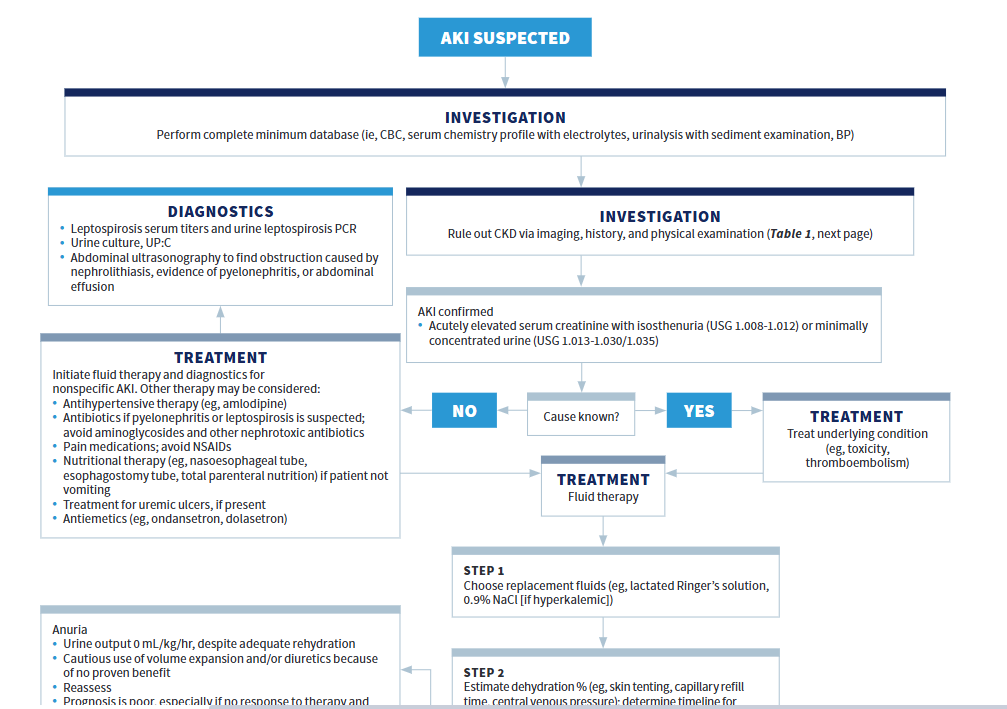
With Miso’s lab results in hand, you open the Azotemia and Acute Kidney Injury (AKI) algorithm. It helps you make sense of the azotemia and decide what needs to happen next, from ruling out CKD and confirming AKI to considering possible causes and monitoring priorities.
Step 2: Put AKI Treatment Guidance Into Context
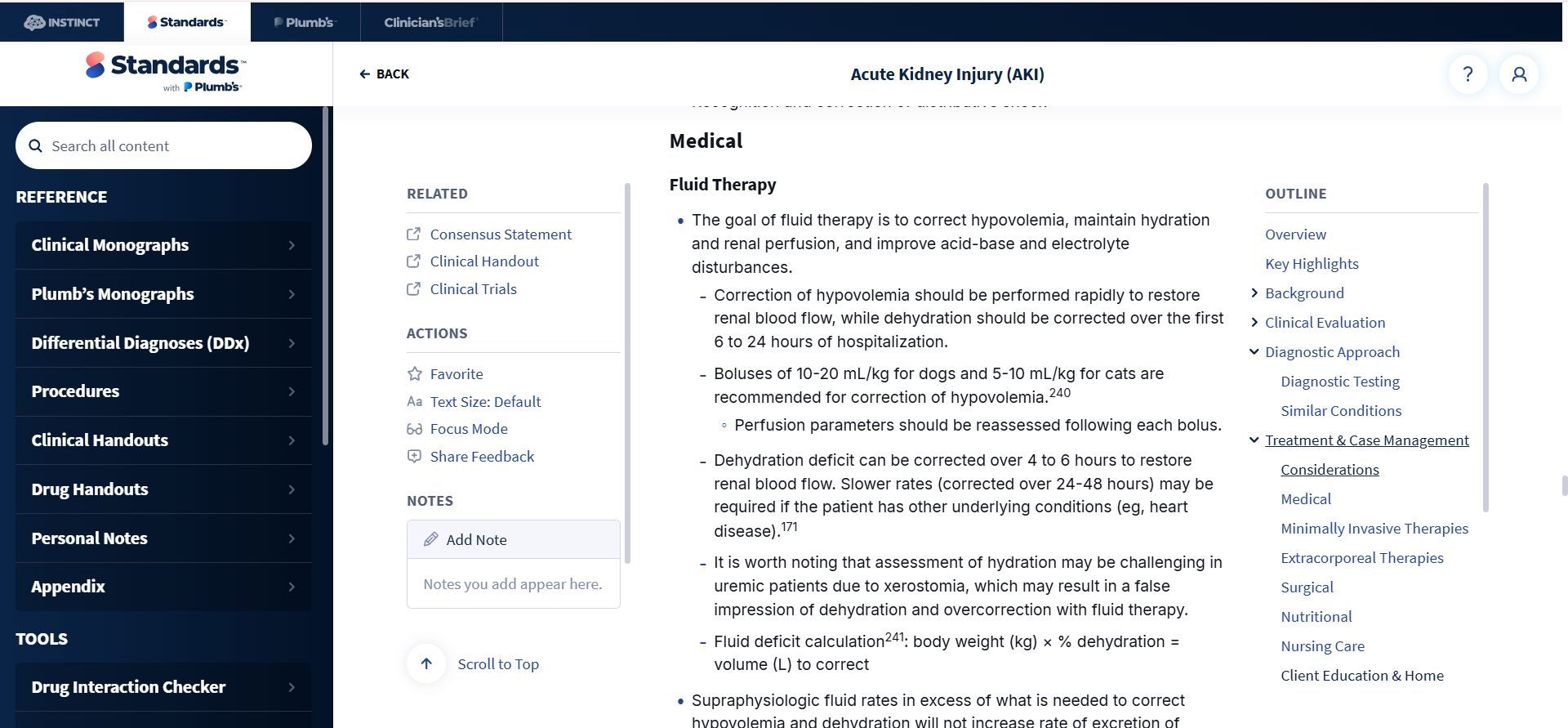
Once AKI is on your problem list, you turn to the AKI clinical monograph. This peer-reviewed, expert-written monograph gives you diagnostic guidance, practical veterinary treatment guidelines, monitoring priorities, prognosis, and follow-up considerations. It follows a spectrum-of-care approach, so the recommendations support real-world decision-making.
Read: One Size Doesn’t Fit All: How the Spectrum of Care Can Guide Veterinary Decisions
For Miso, the cause of her AKI isn’t clear, but the monograph helps you focus on what matters now, what needs close monitoring, and what may need to change as the case evolves.
See how Standards helps you move from case questions to clear next steps. Watch a free demo.
Step 3: Check Drug Interactions Before You Prescribe
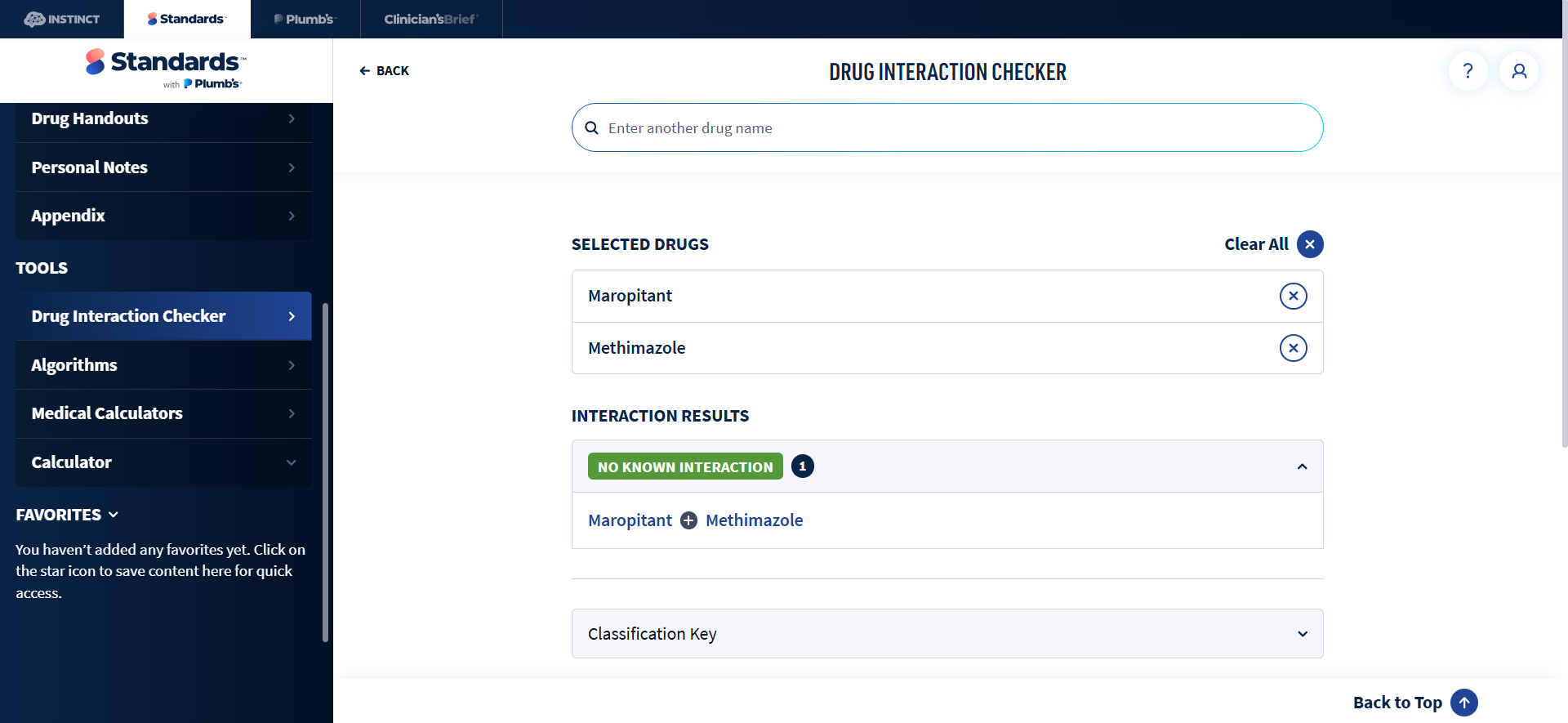
You’re considering maropitant to help manage Miso’s nausea, but she’s already taking methimazole for hyperthyroidism. With Plumb’s built into Standards, you can review the drug details and run the combination through the drug interaction checker, so you can identify potential interactions and prescribe with confidence.
Step 4: Support Nutrition With Step-by-Step Procedure Guidance
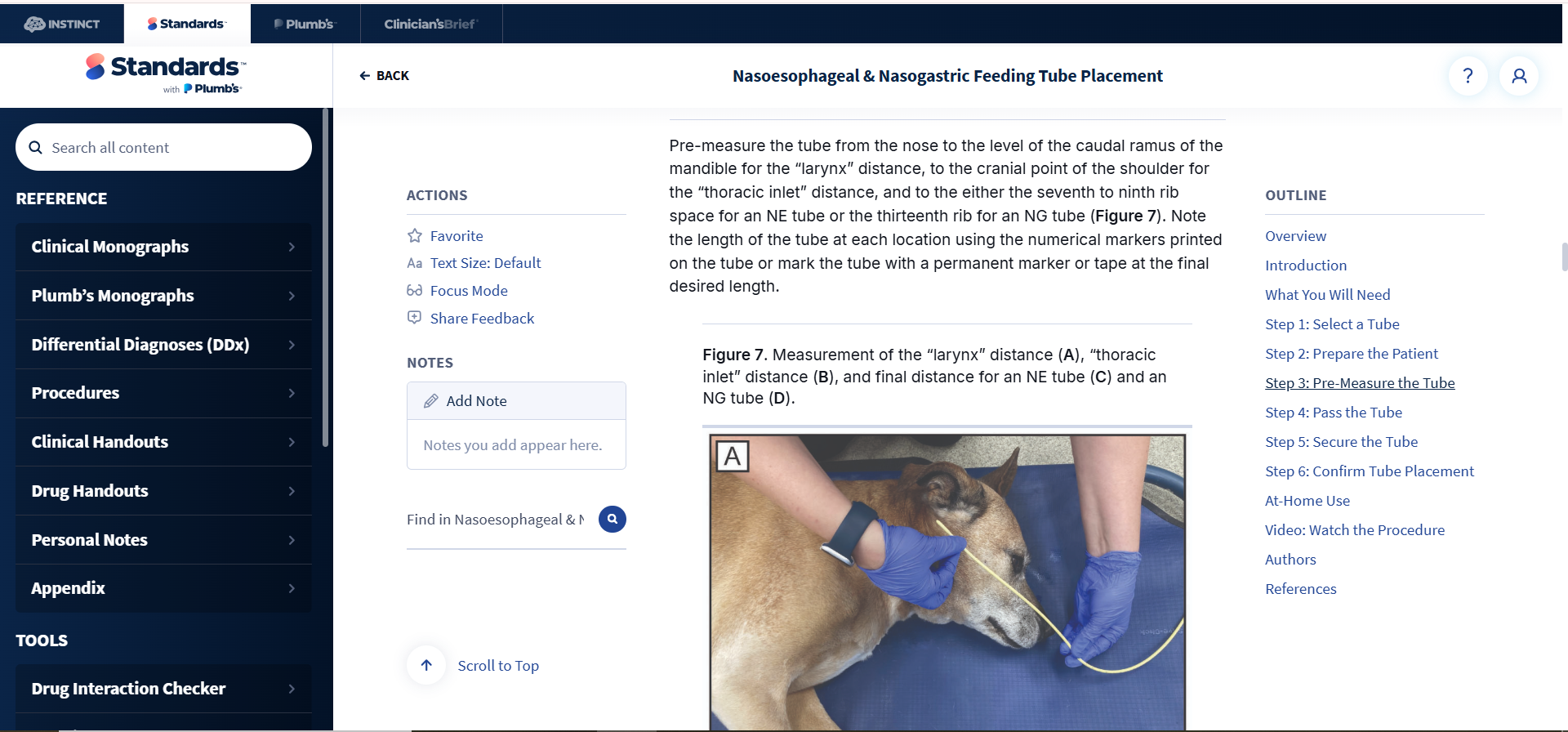
Even with her nausea better controlled, Miso still isn’t eating enough on her own. To support enteral nutrition, you open the Nasoesophageal & Nasogastric Feeding Tube Placement procedure guide in Standards. The visual guide walks you through the process, from supplies and placement to confirmation and patient care considerations.
Step 5: Support the Client Conversation With a Clinical Handout
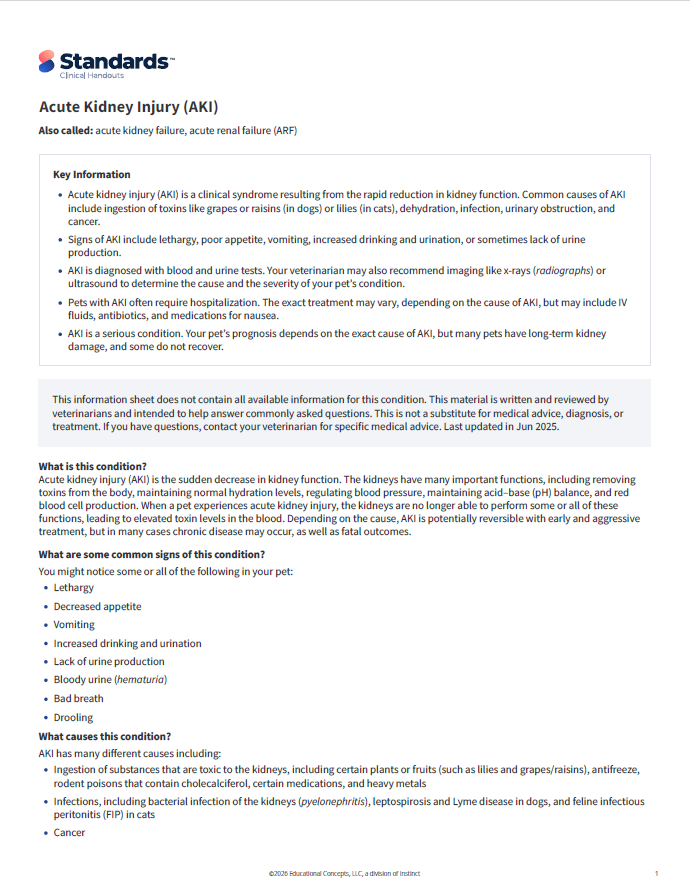
Miso’s prognosis is still uncertain, and her owner is understandably worried. To help guide the conversation, you pull up the AKI clinical handout in Standards.
The handout explains what AKI is, why hospitalization and monitoring are needed, and what the team is watching for as Miso responds to treatment. It gives the client a clear, reliable resource to reference while decisions are still being made.
From Clinical Questions to a Clear Plan
Miso still needs ongoing care, but her team has a clear path forward and her owner has a better understanding of what’s happening.
Whether a case is routine, complex, or changing by the hour, Standards helps your team move from scattered questions to a clearer plan, with support for differentials, diagnostics, treatment, prescribing, procedures, and client communication. Ready to see how Standards can support your next case? Watch a free demo.
See how easy it is to access trusted, evidence-based clinical guidance.
Watch a free demo