


Keeping up with every new study or guideline isn’t easy when you’re seeing patients all day. That’s why a team of veterinary experts continually updates the content in Standards of Care (formerly Plumb’s Pro), so you have current clinical guidance to turn to when you need it.
Take canine chronic inflammatory enteropathy (CIE). Many of us have used the term inflammatory bowel disease (IBD) for years, but the changes go beyond terminology. The CIE monograph in Standards now includes revised recommendations for diagnosis and treatment. Here’s how that guidance can help you work through a familiar chronic GI case.
Case Presentation: A Dog With Chronic GI Signs
Meet Sophie, a 5-year-old spayed female mixed-breed dog whose owner reports intermittent soft stools and occasional vomiting over the past month. She’s still eating well, has plenty of energy, and hasn’t lost weight.
On examination, Sophie is bright, comfortable, and in good body condition. Her initial workup, including CBC, serum chemistry, urinalysis, and fecal testing, is unremarkable. Her albumin concentration is normal, and there’s no evidence of intestinal parasites. With chronic enteropathy among your differentials, you open the CIE monograph in Standards to decide on next steps.
Want a closer look at Standards? Watch a free demo to see how Standards can help you move from clinical questions to clear next steps.
How Much Testing Does Sophie Need?
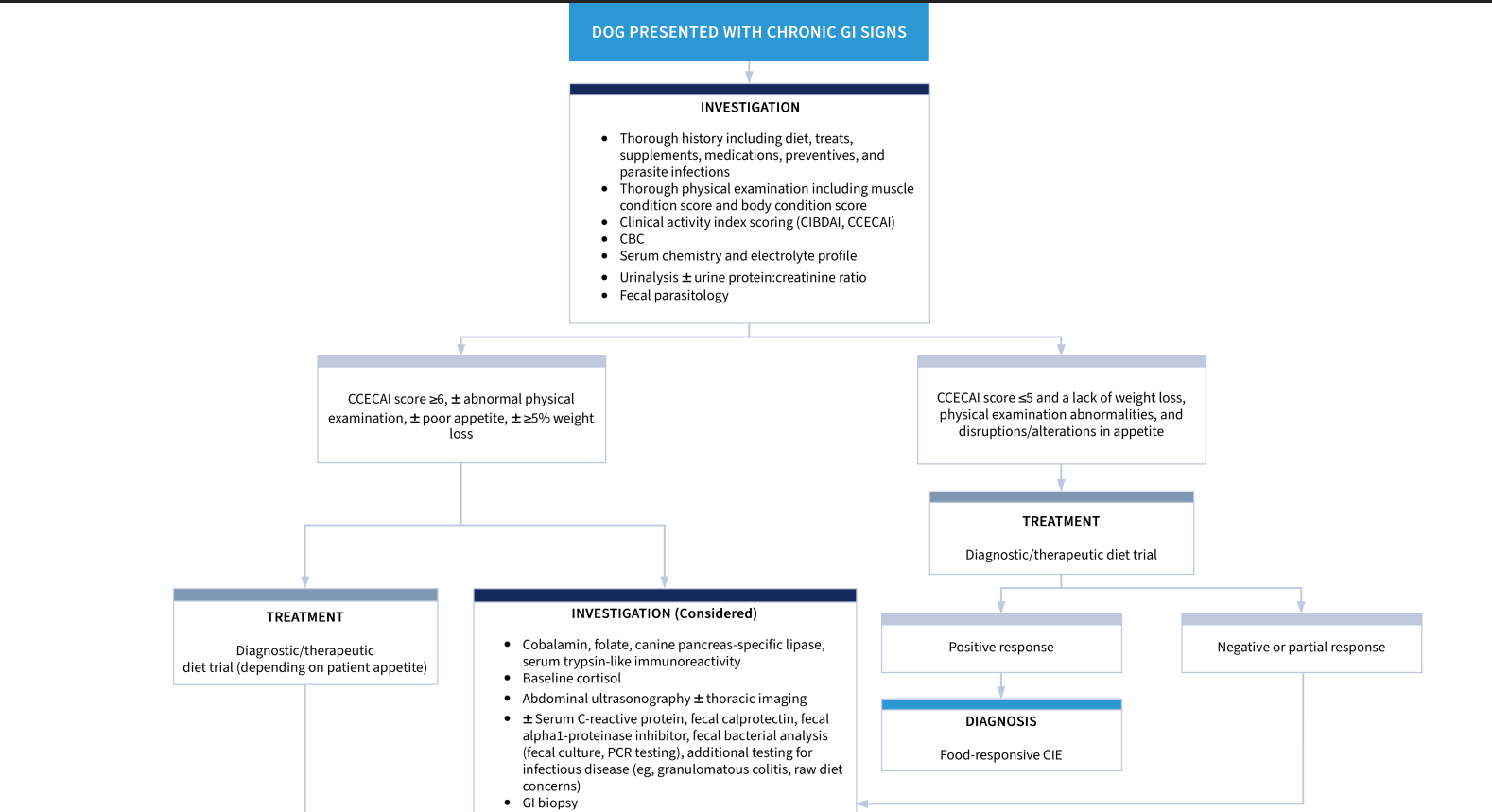
The updated Standards monograph incorporates recommendations from the 2026 ACVIM-endorsed consensus statement, including a more structured, two-tiered approach to diagnosing CIE. The approach uses clinical and laboratory findings, along with disease activity scores like the Canine Chronic Enteropathy Clinical Activity Index (CCECAI), to help determine how much diagnostic investigation a patient needs.
Sophie’s signs are mild, and her initial testing hasn’t revealed any concerning findings, so a dietary trial may be a reasonable next step once other potential causes have been evaluated. But if she were losing weight, had a poor appetite, or was hypoalbuminemic, further investigation might be needed before waiting to see how she responds to dietary management.
The CIE monograph also includes a diagnostic algorithm to help you work through these different approaches based on your patient’s findings.
What happens when a case takes an unexpected turn? Read Trauma or Something More? A Veterinary Case Walkthrough With Standards.
A More Structured Approach to Diet Trials
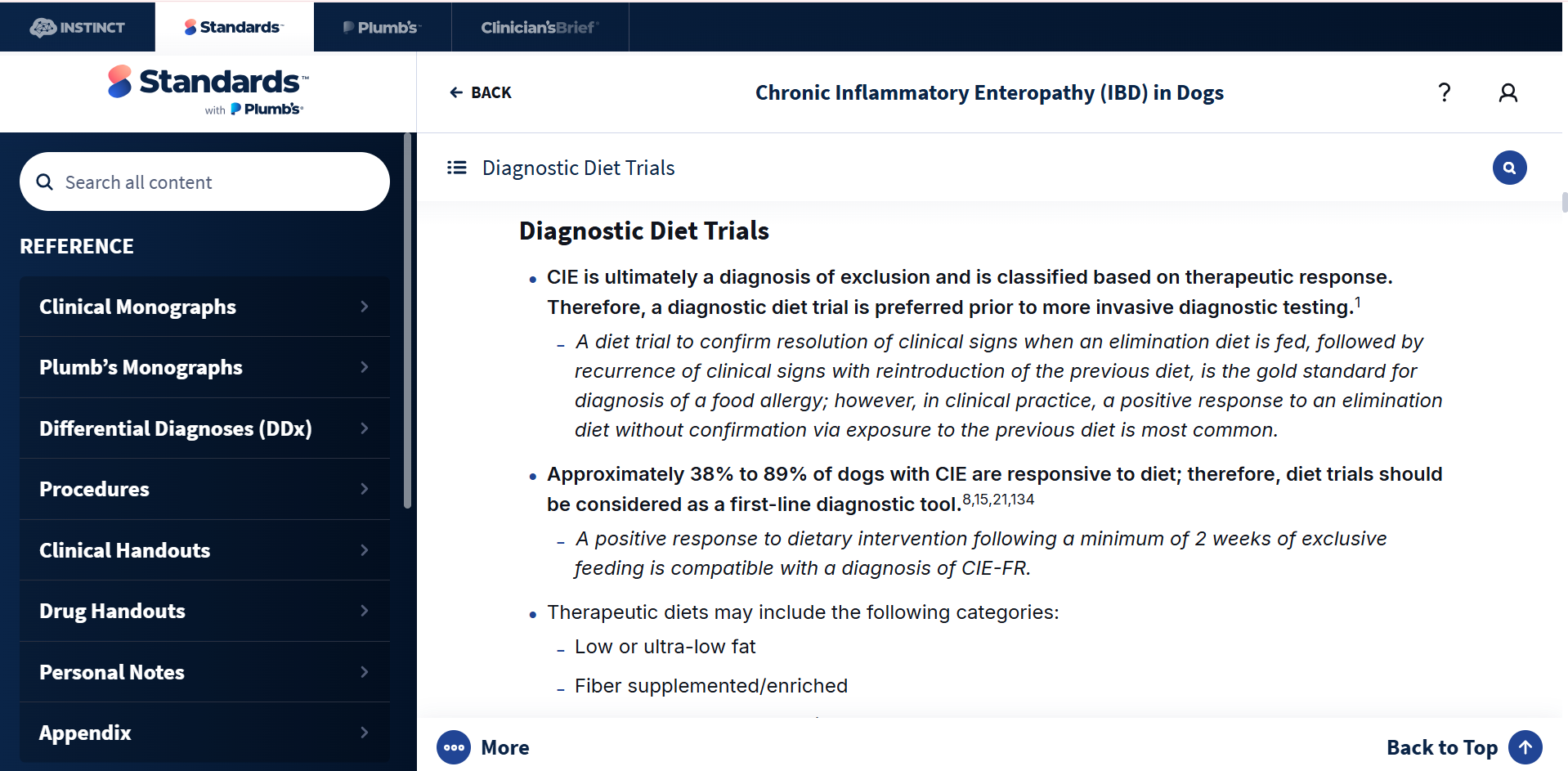
For Sophie, you decide to proceed with a structured diet trial. While dietary management is nothing new for dogs with chronic enteropathy, the updated recommendations emphasize trying multiple appropriate diets before pursuing more invasive diagnostics or immunosuppressive treatment in stable patients.
The monograph provides guidance on selecting appropriate diets, conducting strict trials, and assessing response. It recommends at least 2 weeks of exclusive feeding per trial and, ideally, trying three different, appropriate diets before concluding that dietary management has failed in dogs with mild disease.
If Sophie doesn’t improve with the first diet, another may still work, provided her clinical status remains stable.
Want to see Standards in action with another common clinical challenge? Read Feline Urethral Obstruction: A Case Walkthrough With Standards.
Updated Antibiotic and Corticosteroid Guidance
Another change in the updated Standards monograph is the move away from antibiotic-responsive enteropathy as a classification of CIE. The 2026 consensus statement no longer recommends this classification and discourages routine antibiotic trials with drugs like metronidazole or tylosin due to concerns about relapse, antimicrobial resistance, and prolonged intestinal dysbiosis.
That doesn’t mean antibiotics never have a role, but persistent GI signs alone aren’t a reason to prescribe them.
Corticosteroids still have a role in treating CIE, but they’re not appropriate for every patient. The monograph outlines when to consider them, including what further diagnostics or GI biopsies may be appropriate before starting treatment.
If Sophie’s signs persist despite appropriate dietary management or her condition worsens, you can return to Standards to review those recommendations and consider what to do next.
Keeping Up With Changing Recommendations
Even a familiar case like Sophie’s can raise questions about how best to approach diagnosis and treatment. How much testing is needed? When should you try another diet? And when is it time to consider other options?
With Standards, you can check updated recommendations, review diagnostic algorithms, and explore treatment options as those questions come up, all in one place.
Want to see how Standards can support your next case?
Watch a free demo