


Have your instructors given you the “fire hose” speech yet? You know the one: You’re excited to have finally become a veterinary student, and then they warn you just how much of the next 4 years you’re going to spend cramming an overwhelming amount of information into your brain. And then trying to put it all together in a way that’s applicable to your patients and helps keep them healthy.
They might also remind you that you should make sure to focus on your wellbeing, too.
You know… no pressure.
We’ve been there. And we’ve got good news. We can help you handle the fire hose.
“We” are the team behind Standards of Care™—the same practicing veterinarians, veterinary pharmacists, and award-winning content editors who create the popular veterinary drug reference, Plumb’s Veterinary Drugs.
Your Solution to Information Overload
We created Standards™ to help veterinarians (and students like you) handle information overload without burning out. It’s designed to introduce you to the daily realities of small animal practice and prepare you to handle those realities. By starting to use it in classes and clinics, you’ll have a head start when you enter practice.
Standards™ is a veterinary clinical decision support tool. These digital tools are ubiquitous in human medicine.
They’re easy-to-search references that bring the relevant, peer-reviewed, continually updated medical information you need together in one place. Studies suggest they improve efficiency and patient safety and reduce diagnostic errors.
In practice (or on clinical rotations), a CDS tool is perfect for preparing for cases, pivoting on the go, or wrapping up records. In class, it can be especially helpful for finding the information you need—fast.
Let’s look at 3 benefits to using Standards™—in school and beyond.
1. A reliable reference that’s easy to navigate
Whether you’re still stuck in the “ologies”, working up your first hypothetical case, seeing your first patients on clinical rotations, or finally practicing under your own license, Standards™ helps you efficiently find trustworthy information.
The original content in Standards™ is written by your professors and their peers, and it’s peer reviewed. It’s also simple to search via the same easy-to-use interface as the popular Plumb’s Veterinary Drugs platform.
So, in a snap, you can find:
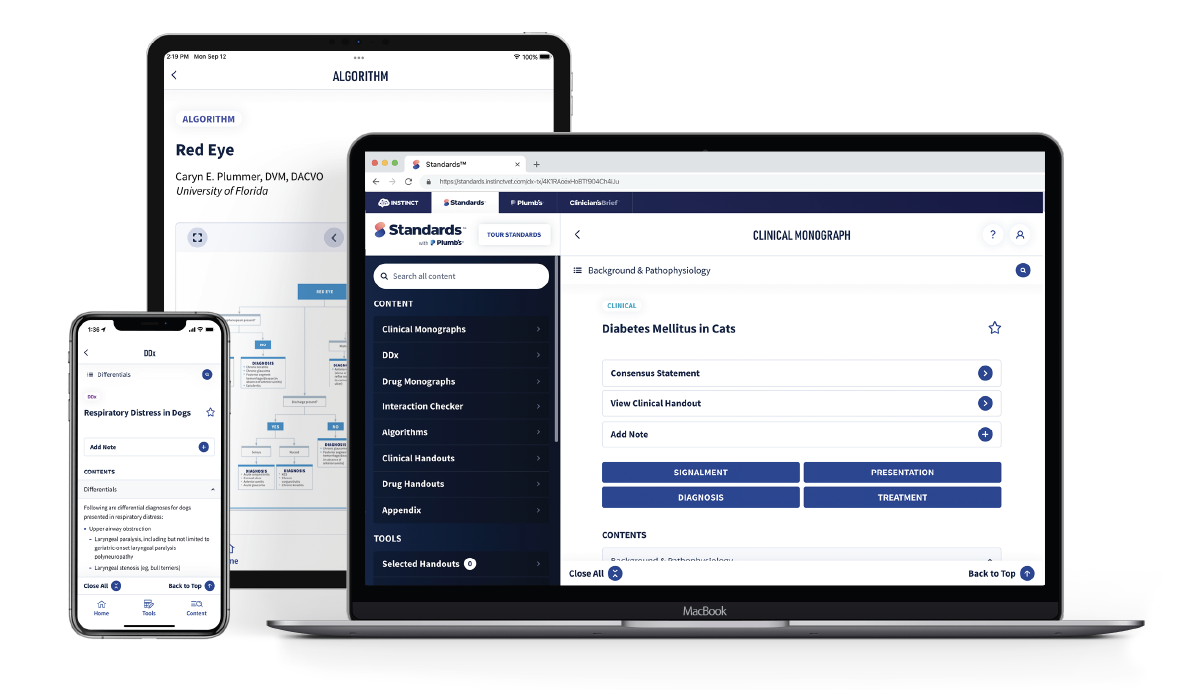
- Clinical monographs: Essential information on common clinical conditions, procedures, and preventive care
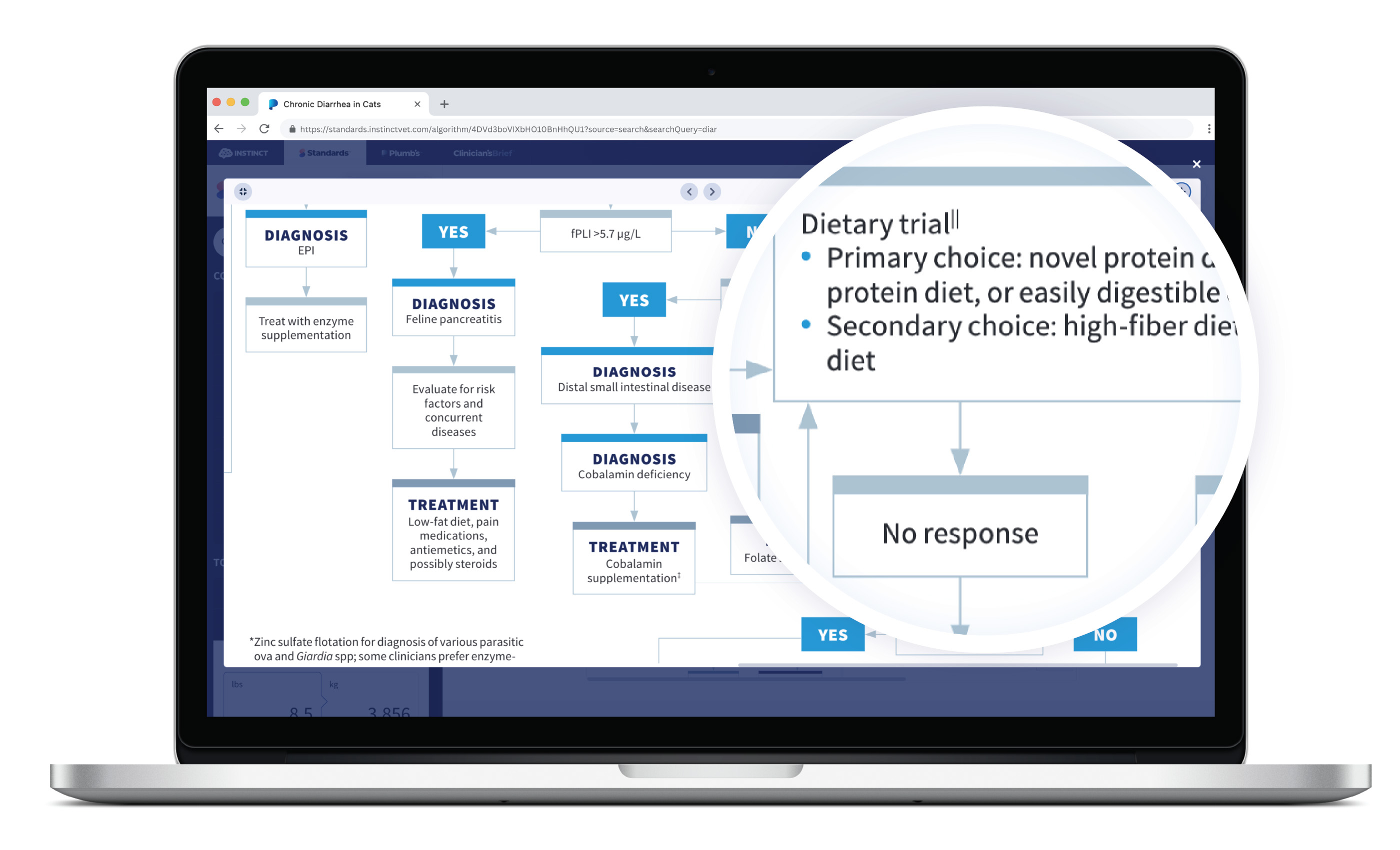
- Algorithms: Flowcharts on the diagnosis and treatment of emergency, complex, and recurrent cases
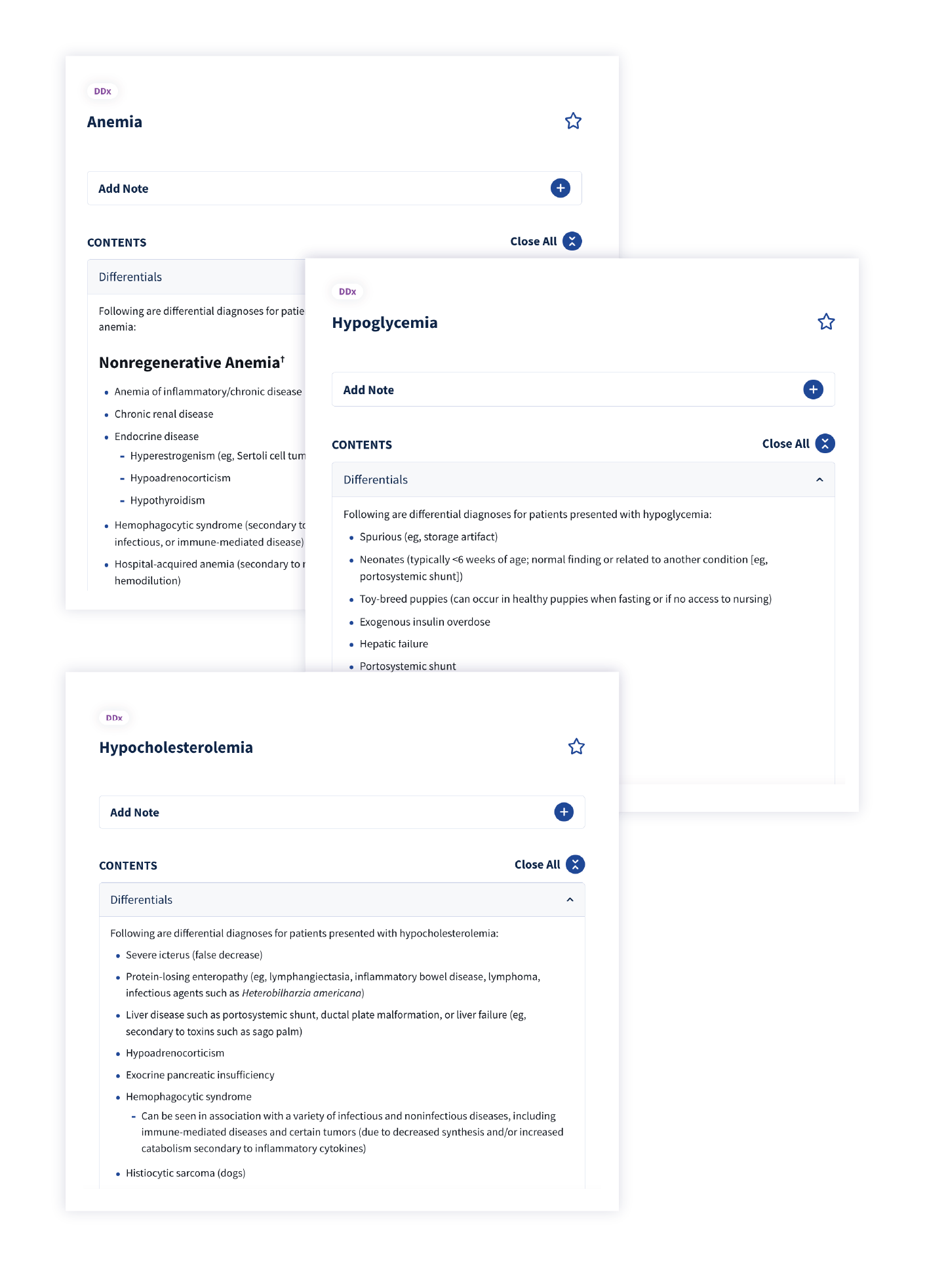
- DDx lists: Organized lists of differentials for clinical signs and labwork abnormalities
- Clinical handouts for pet owners: Easy-to-understand and client-friendly guides to help communicate complex concepts
- Plus all the essential information in Plumb’s Veterinary Drugs, including:
- Drug monographs
- Drug handouts for pet owners
- Drug interaction checker
- And there’s even more to come!
Spend less of your valuable time scanning notes and textbooks and get straight to the answers you need with Standards of Care™.
2. Information in an up-to-date clinical context
Tackle cases that classes and clinics might not cover
Veterinary students aren’t the only ones suffering from information overload.
Instructors can’t cover everything in the classroom, and how much you actually see on clinical rotations depends a bit on the luck of the draw. The teaching hospital’s caseload might not always match the kinds of cases you’ll see in practice.
And that’s why Standards™ has practical information to help fill in the gaps. Anal sacculitis, anyone?
Always stay up to date
Standards™ can also help you learn to ride the tides of emerging medical information. A new consensus statement might mean recommended care isn’t the same between your last lectures and the first question on clinics.
Plus, a lot can happen between your textbook’s publication date and you actually scanning its chapters. Standards™ is continually updated so you can stay in the know.
Keep helpful hints where you can find them later
During long nights studying endless lists of bacteria or medications, you might find yourself wondering, Is this actually useful or do I just have to know it for the test?
Putting information in practical contexts can make it easier to recall when you need it (and help you find the motivation to push through your study session).
With a clinical decision support tool like Standards of Care™, you can see how you’ll actually apply the information you’re studying. Instead of memorizing the list of 8 available tests for leptospirosis, use the disease algorithm in Standards™ to clear up what we use each test for, when to use it, and why.
3. A reference that’s just right for you
Standards™ has customization features you can continue to use even after you leave school. Stick personalized notes just about anywhere (perhaps to jot down your professor’s favorite sedation protocol). Have Standards™ content you reference regularly? Save it to favorites and it’ll be one of the first things you see when you sign in.
Once the pace picks up in clinical practice, rather than rifling through old school notes, you’ll already have what you need just a click away.
Our team has faced down the fire hose ourselves, and we want to help. That’s why we offer special rates on Standards of Care™ for students and new graduates to help when information overload can feel most intense (and when budgets are especially tight). Start leveraging—and personalizing—your new favorite reference now.