


Whether you’re a general practice expert or thrive on adrenaline in the ER, you see your share of routine complaints: ear infections, limping dogs, and GI upsets. But no matter where you practice, the unexpected is always around the corner.
When that moment comes, you need trusted clinical guidance at your fingertips—something that works the way you do: quickly, intuitively, and reliably. That’s exactly where Standards of Care shines.
Let’s walk through a real-world case, so you can see how Standards can help you navigate even your most complex cases with clarity and confidence.
Case Presentation: Muscle Weakness and Lethargy in a Dog
It’s a packed ER shift, and your next patient is Ziggy, a 7-year-old neutered male husky mix. His owner reports that over the last two weeks, Ziggy has:
- Slowed down on walks
- Taken longer to get up after resting
- Shown less interest in food
- Vomited occasionally
This morning, Ziggy became noticeably more lethargic, barely responding when called. When it was time for his walk, he struggled to stand.
On physical examination, Ziggy is mildly dehydrated, weak, and dull. His vitals are normal. He shows no overt pain or neurological deficits, but his movements are slow, and he exhibits generalized muscle weakness.
Step 1: Open Standards of Care
Based on Ziggy’s history and physical examination, you order baseline diagnostics—a complete blood count, chemistry panel, and urinalysis.
As you wait for test results, you pull out your phone and open Standards, a veterinary clinical decision support tool with practical, expert-backed guidance that combines the latest medical knowledge with real-world patient needs and client considerations.
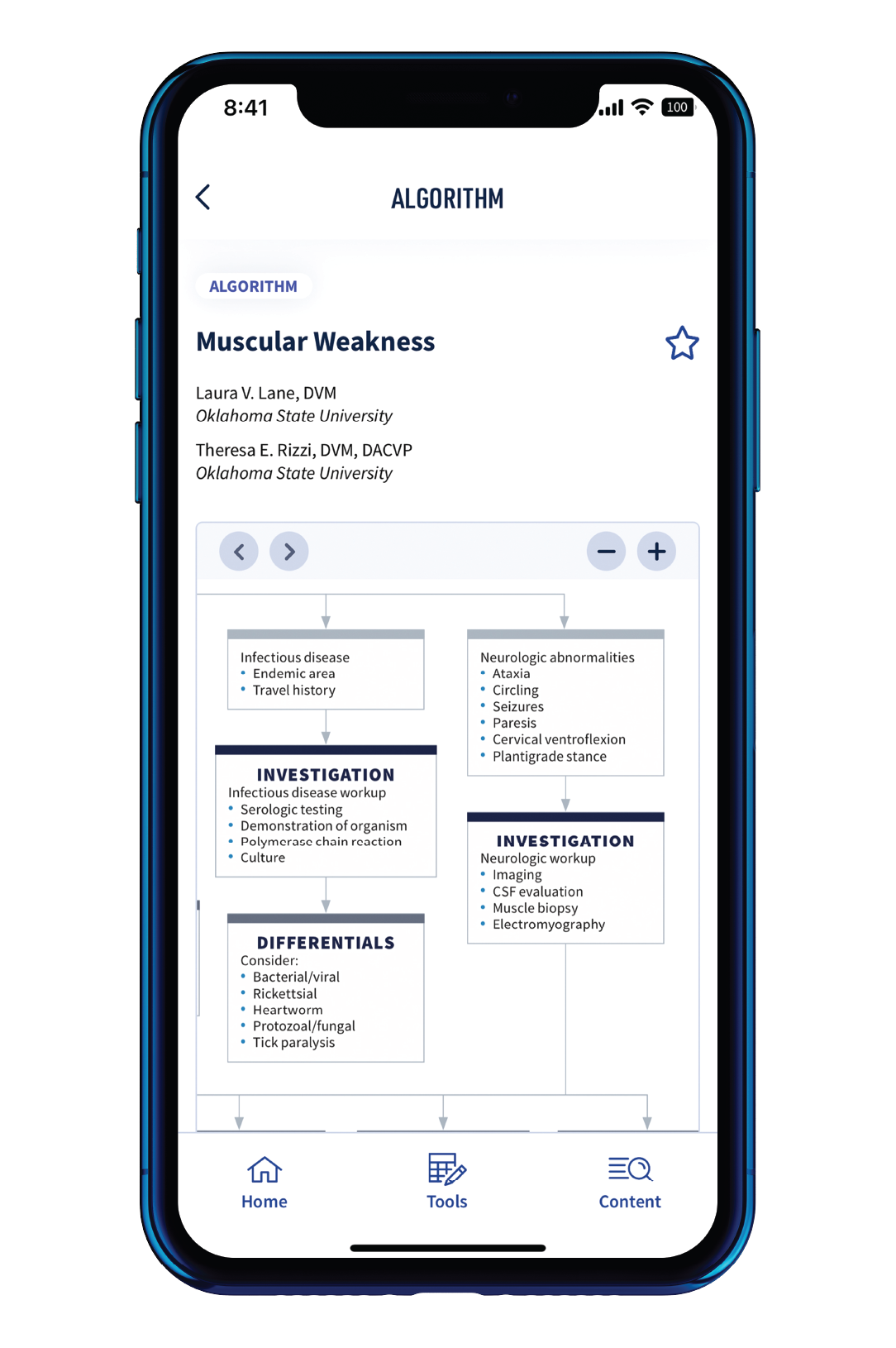
You start with the muscular weakness algorithm, which walks you through workup. It reminds you to consider metabolic and endocrine conditions and ask about travel history.
When you get Ziggy’s lab results back, they reveal:
- Mild, nonregenerative anemia
- Mild to moderate hypocholesterolemia
- Mild hypoglycemia
Step 2: Narrow the Field with DDx
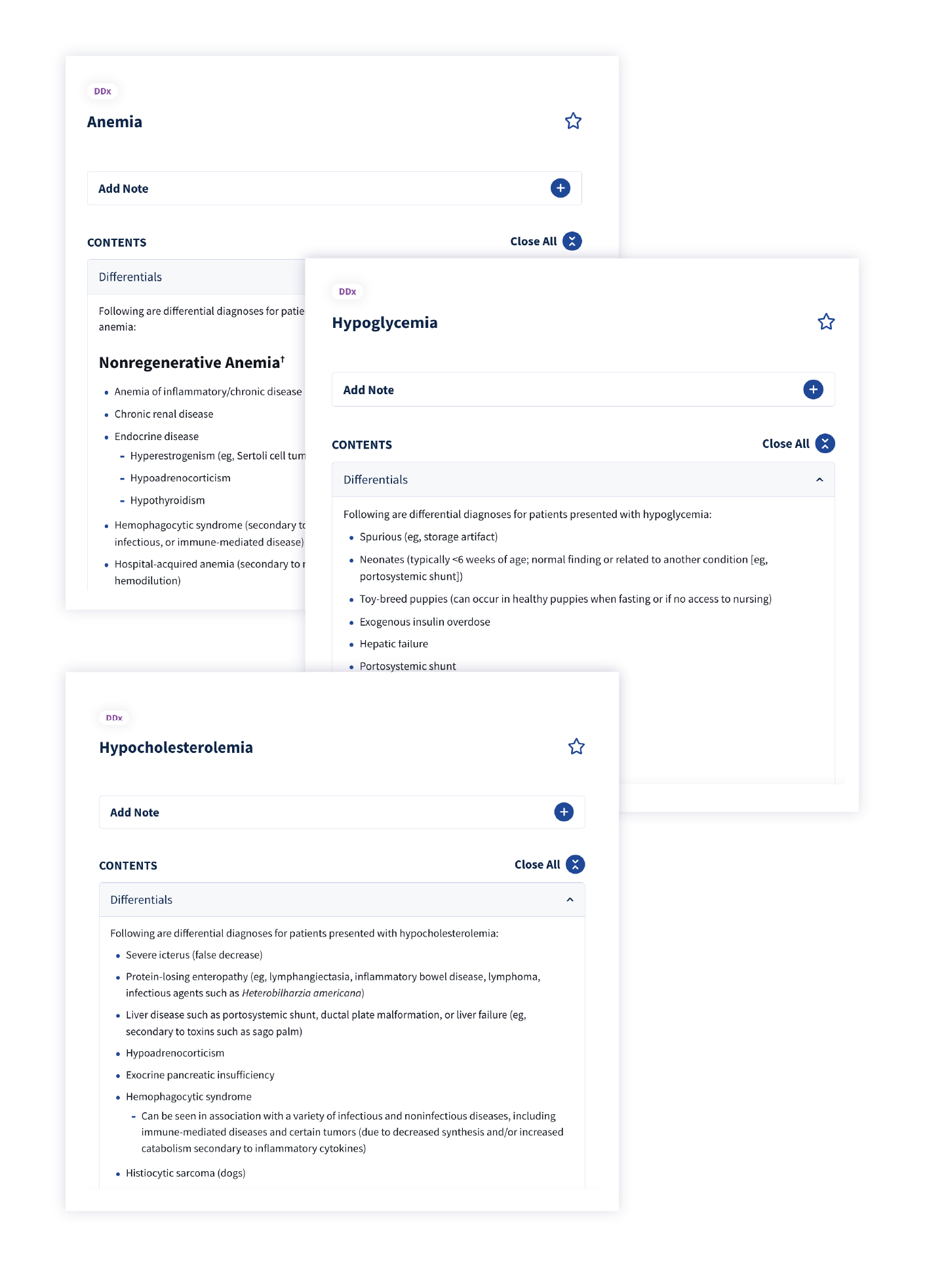
You tap into the differential diagnosis lists in Standards and search for each of Ziggy’s abnormal results: anemia, hypocholesterolemia, and hypoglycemia.
One condition pops up on all three differential lists: hypoadrenocorticism.
Want to see Standards in action? Watch a free demo.
Step 3: Confirm Your Diagnosis
Now that atypical Addison’s disease is on your radar, it’s time to review the latest diagnostic recommendations.
You turn to the clinical monograph on hypoadrenocorticism for practical, peer-reviewed diagnostic and treatment guidance that follows a spectrum of care approach, balancing the latest medical knowledge with real-world patient needs and client considerations.
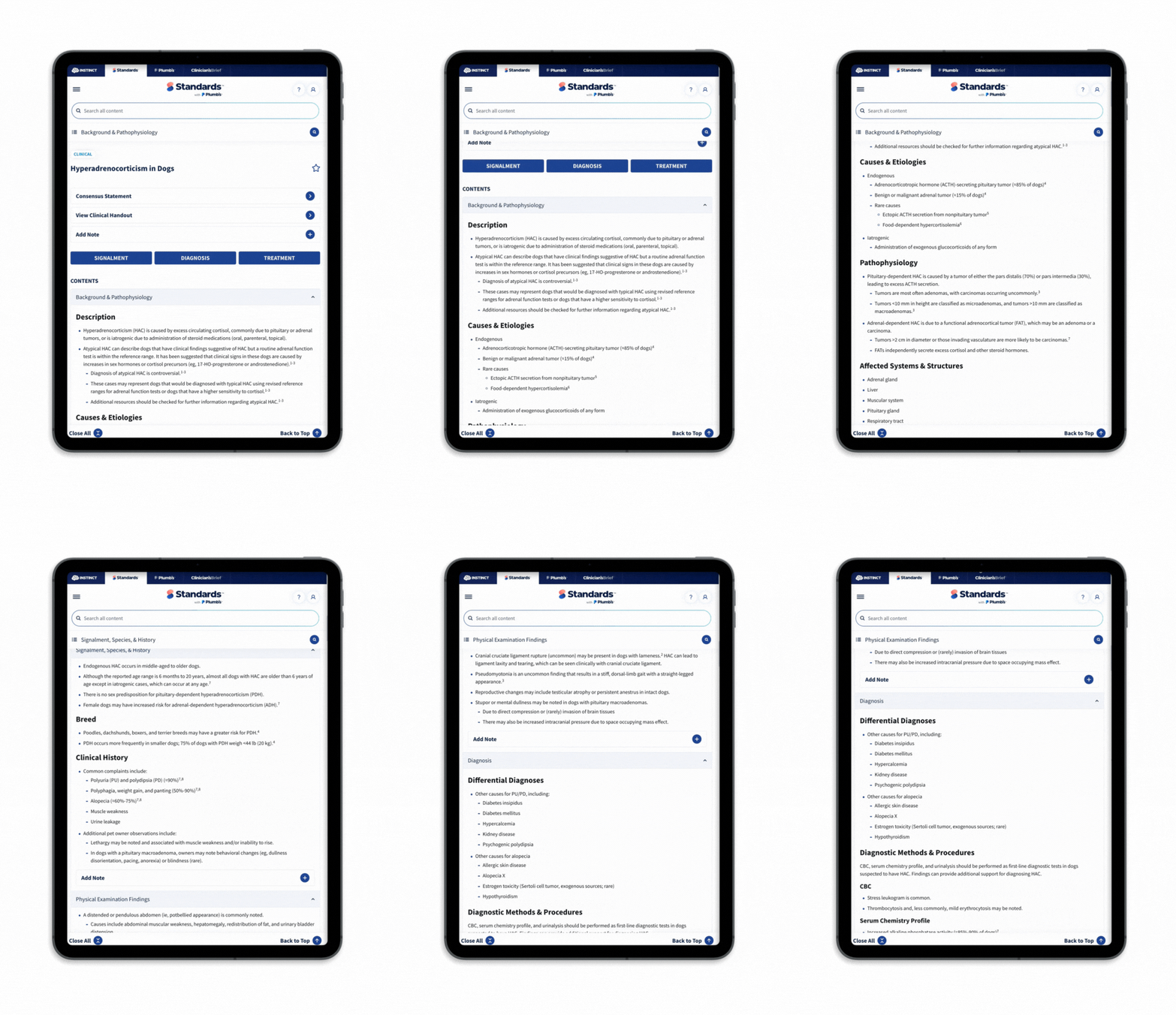
You learn that baseline cortisol levels are an excellent way to screen for hypoadrenocorticism, especially in eunatremic/eukalemic dogs like Ziggy. His result is 2 µg/dL (55 nmol/L) which supports—but does not confirm—glucocorticoid-dependent hypoadrenocorticism.
Following the clinical monograph, you perform the outlined ACTH stimulation test protocol, which confirms the diagnosis of atypical Addison’s.
Step 4: Treat Confidently with Plumb’s
Based on the guidance in the treatment section of the clinical monograph, you recommend hospitalizing Ziggy for IV fluids and dexamethasone treatment, with a plan to transition to oral prednisone before discharge.
Because Standards includes the prescribing support of Plumb’s, you can find dosing information in the dexamethasone drug monograph—without leaving Standards. You can even use the built-in calculator to determine Ziggy’s dose.
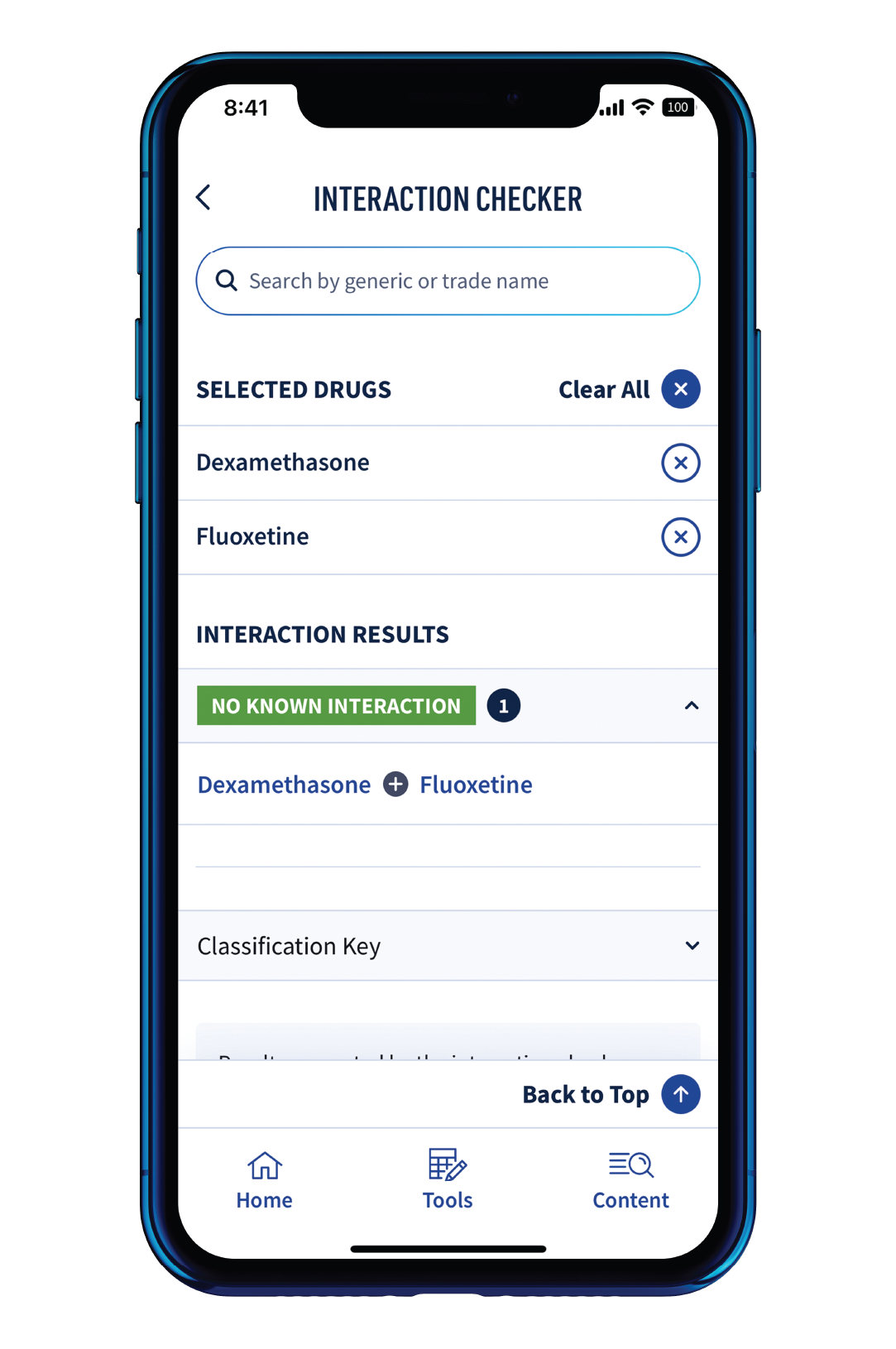
Ziggy is currently on fluoxetine for separation anxiety, so you enter his meds in the drug interaction checker in Standards to confirm there are no major interactions.
Step 5: Communicate Clearly With Your Client
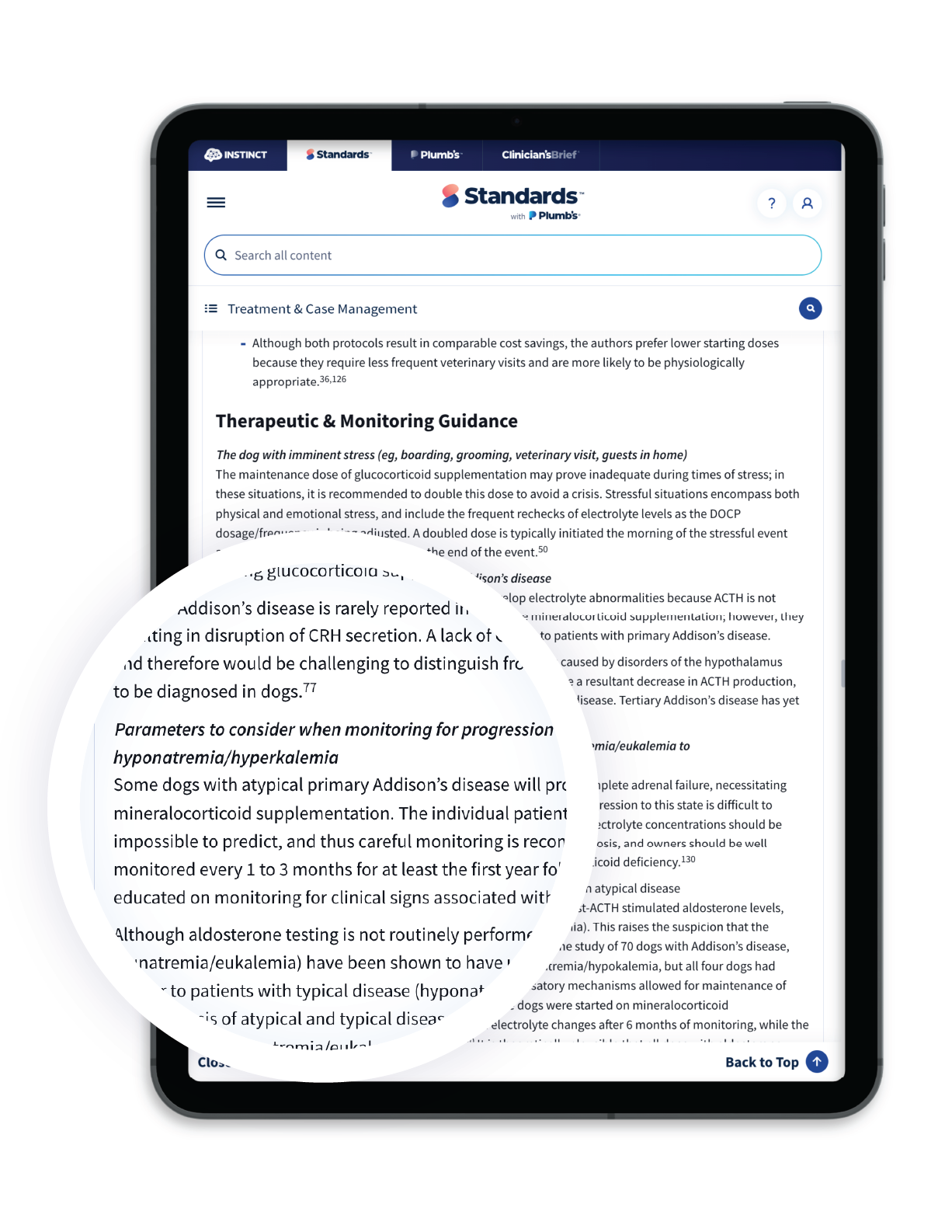
After 48 hours of supportive care, Ziggy is much improved. Before discharge, you review the Therapeutic & Monitoring Guidance section of the clinical monograph, which outlines specific monitoring protocols for eunatremic and eukalemic patients like Ziggy.
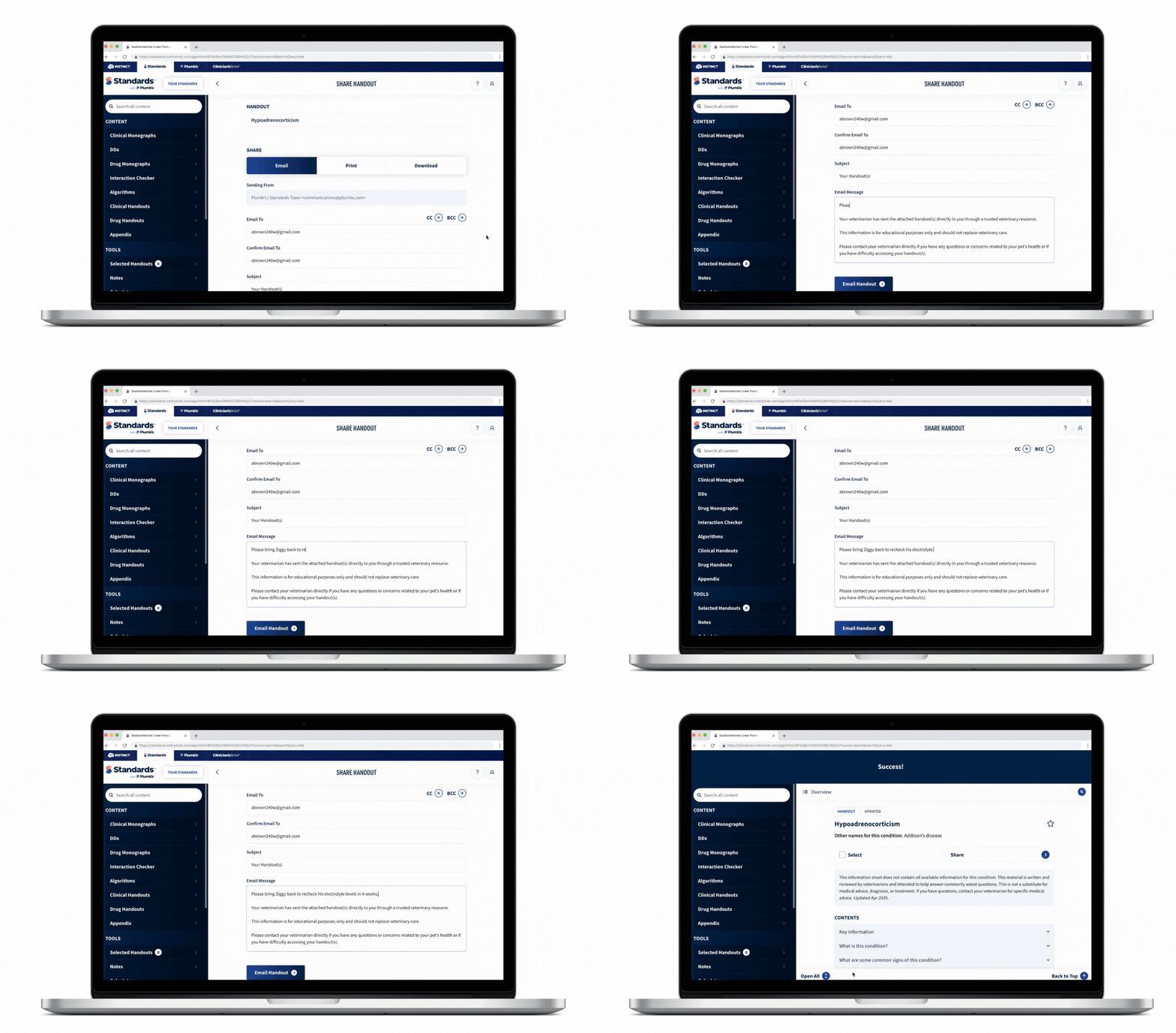
To ensure Ziggy’s owner knows what to watch for and when a recheck is needed, you add your recommendations to the hypoadrenocorticism clinical handout and email it along with the prednisone drug handout from Plumb’s.
From Unclear Signs to a Confident Diagnosis
When the diagnosis isn’t obvious, Standards of Care can help you:
- Navigate subtle or atypical presentations
- Confirm your suspicions with evidence-backed guidance
- Choose treatments and avoid drug interactions
- Communicate effectively with worried pet owners
Instead of flipping through books or scrolling through forums, you can have expert guidance in your pocket for whatever challenge comes next (even a case of atypical Addison’s).
Ready to Try It?
Standards is the veterinary clinical decision support tool built for real-world practice. With continually updated, peer-reviewed diagnostic and treatment guidance, client education tools, and Plumb’s built in, it’s everything you need to make confident decisions in veterinary practice.