


When that patient you’re seeing for a wellness appointment turns out to be seriously unwell, where do you turn for diagnostic and treatment guidance? Veterinary resources on your bookshelf? Online forums? Social media? Colleagues?
And most importantly, how do you know if the information you find is accurate and up-to-date?
Now you can skip the time-consuming search for reliable information. When you use the clinical monographs in Standards of Care™, you can trust that the diagnostic and treatment information you find is current and accurate. But don’t just take our word for it—the proof is in the process. So let’s go behind the scenes to see how a clinical monograph evolves.
Focus on ATE
The feline arterial thromboembolism (ATE) clinical monograph was published in December 2022. And like every clinical monograph in Standards™, it provides clear, actionable recommendations for every step of case workup, from presentation to follow-up.
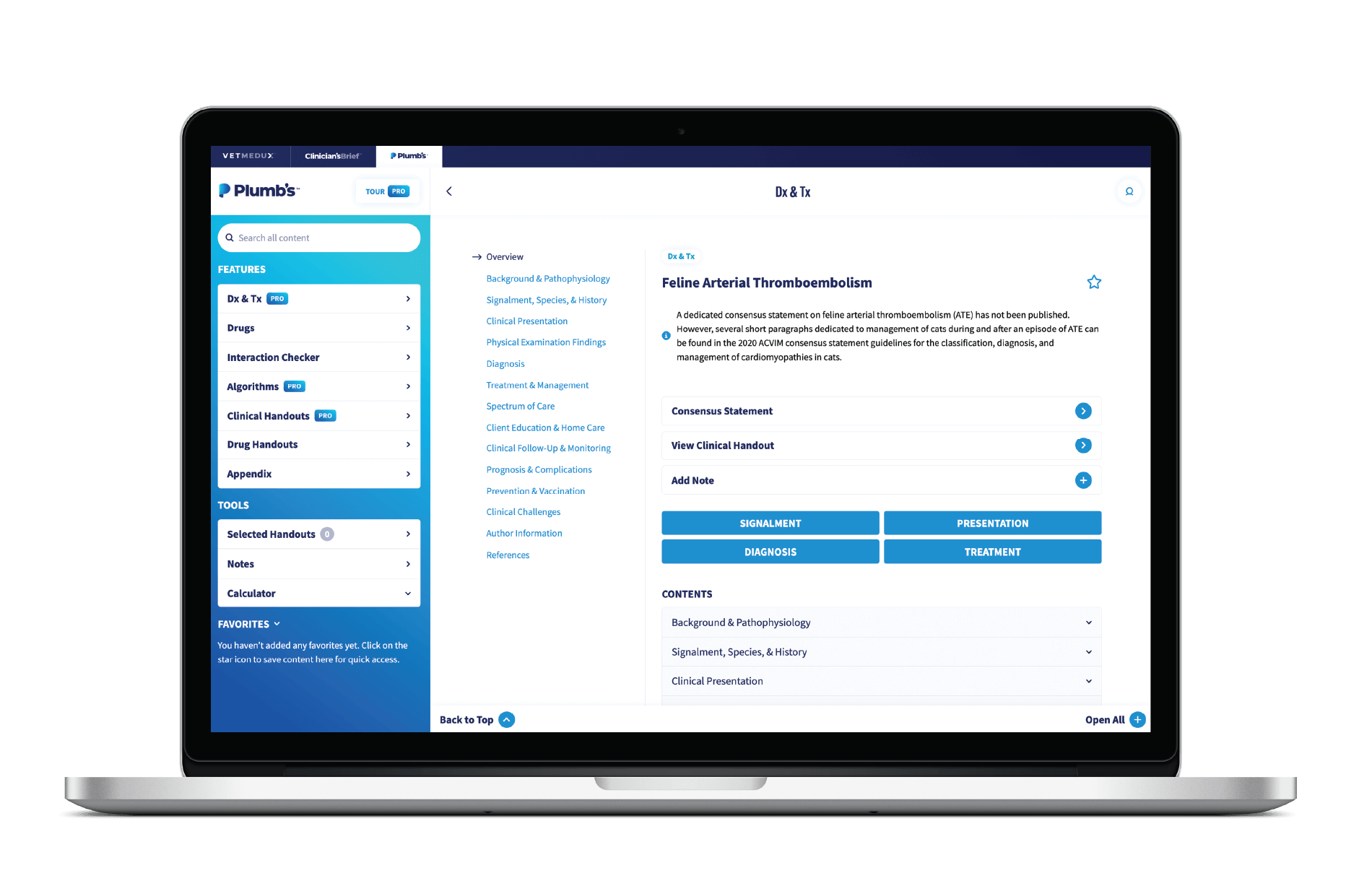
Using the ATE clinical monograph as an example, let’s start at the beginning to see how these clinical monographs come together—and what sets them apart from other veterinary resources.
12 Steps to Create a Standards™ Clinical Monograph
1. Select a high-priority clinical topic.
Every clinical monograph starts here. When selecting a topic, our team brainstorms and chooses a subject based on the topics veterinarians search for when using Standards™ and the feedback they give.
Our team also considers which essential clinical topics are not yet sufficiently addressed in veterinary resources. There was a critical need for practical, up-to-date guidance on treating ATE—so the ATE clinical monograph was born.
2. Choose a board-certified veterinary expert.
Once we have our topic, we choose an author. Unlike many other veterinary resources, each clinical monograph contains all-new, original content written by a single expert in the field.
Our team looks for an active, board-certified expert with ample experience treating and educating other veterinarians about the condition. They also need to excel at collaborating with general practitioners.
For the ATE clinical monograph, we selected Dr. Amanda Coleman, a 2011 Diplomate of the American College of Veterinary Internal Medicine (Cardiology), with assistance from her resident Dr. Arianne Fabella.
3. Develop the first draft from the Plumb’s™ template.
The next step is researching and writing the first draft. All authors follow a fixed template to ensure all relevant details are covered—including presentation, diagnosis, treatment, and even consensus statements if available.
And the final section of a clinical monograph is always a reference list, so you can easily find the source of any information cited.

4. Kick off the veterinary review process with the pre-review.
Once the first draft is finished, it’s time for the first of many reviews: the pre-review. A veterinary editor reviews the monograph to ensure it covers all the content that general practitioners need.
5. Scrutinize with the Plumb’s™ peer-review process.
Next, it’s on to the rigorous peer-review process that every clinical monograph goes through. Two independent specialists, board-certified in the appropriate area of practice, go over the monograph with a fine-tooth comb. They ensure all the information is correct, up-to-date, and relevant.
For the ATE clinical monograph, we selected reviewers from a pool of approximately 40 board-certified cardiologists we call on for peer reviews.
6. Expert copyediting to ensure the writing is clear and correct.
Once the reviewers finish scrutinizing the monograph and making suggestions for revision, it passes to our team of copyeditors. They ensure the content is consistent, cohesive, and complete, and they correct any errors in grammar, punctuation, or spelling.
7. Return the monograph to the author for review and revision.
Then it’s back to the author to make revisions to the monograph based on the comments from the peer reviewers and copyeditors and then send it back to our team.
8. Confirm relevance to veterinarians with two rounds of veterinary review.
We are now in the next phase: two vigorous rounds of internal review by our team of veterinary editors, led by our chief scientific officer, Dr. Indu Mani.
When Dr. Mani and her team review a monograph, they call on their experience as general practitioners to ensure the content is relevant to daily practice and that all the most crucial questions are answered.
9. Make final changes to the monograph.
Almost there! The author makes final revisions to the monograph based on the feedback from the team of veterinary editors.
10. Approve the article for publication.
Our editorial team performs one final review of the article and—finally!—gives the approval for publication.
11. Publish the finished clinical monograph on the Standards™ app and website.
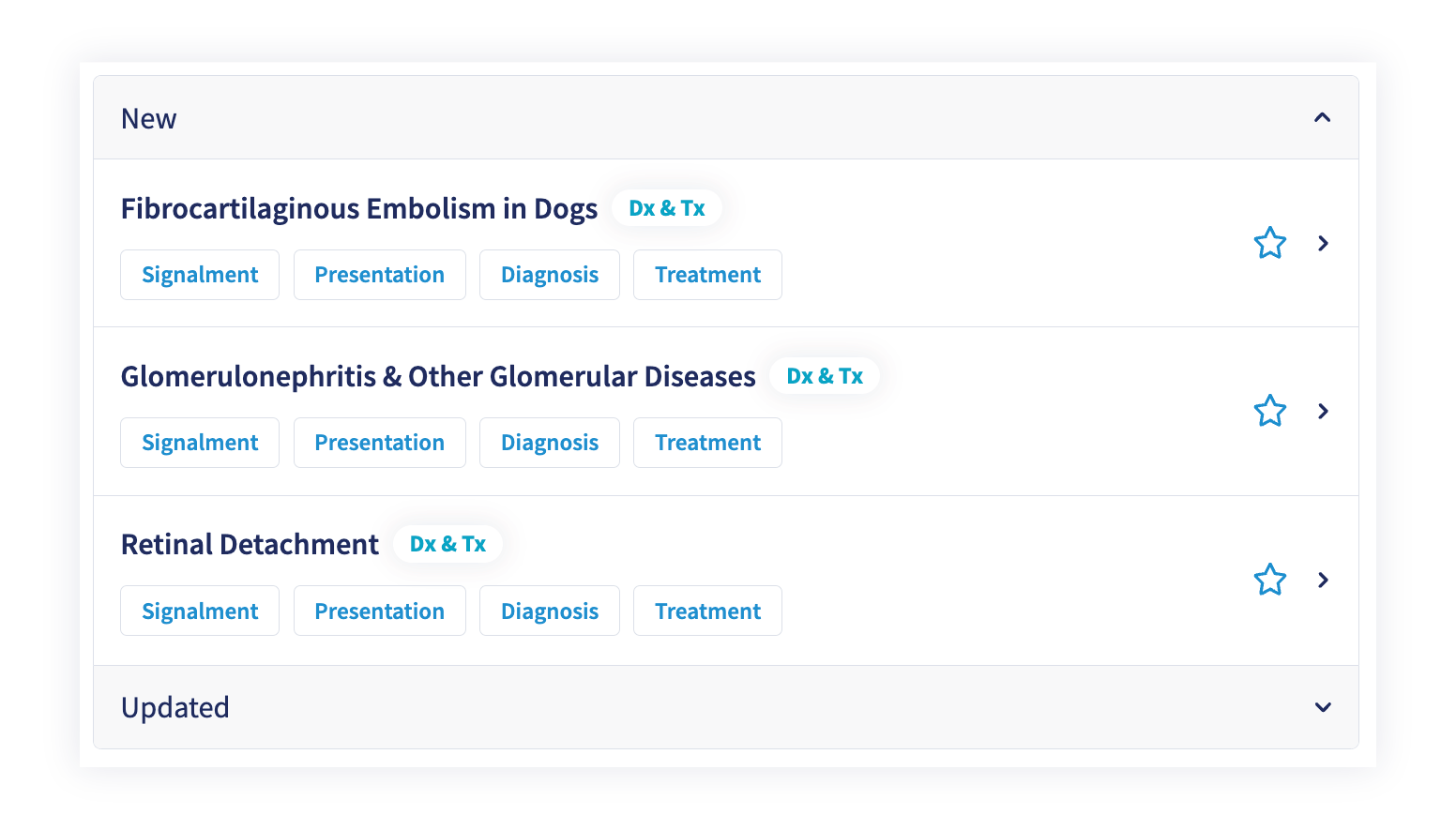
The big moment arrives when completed Standards™ clinical monographs go live on the Standards™ website and mobile app. And you can tell you’re looking at brand-new content thanks to the “New” label when the monograph appears in search results.
But our story isn’t quite finished.
12. Ensure the information in Standards™ remains current and reliable.
We all know information changes rapidly in veterinary medicine. So, all Standards™ clinical monographs undergo a recurring annual review by a section editor who is board-certified in the appropriate practice area.
For the ATE clinical monograph, cardiology section editor Rebecca Quinn, DVM, DACVIM (SAIM, Cardiology), will review the monograph annually. This ensures the information remains accurate and can always be trusted.
And there you have it. When you use Standards™ to find the diagnostic and treatment information you need, you know you can trust your source.
Want to see clinical monographs in action? Watch a free demo.
Get the guidance. Skip the guesswork.
Sign up today.