


Get Your Guide:
Stabilizing Dogs With Upper Airway Obstruction and Heat Stroke
When you’re presented with a patient with an upper airway obstruction, there’s not a lot of time to decide what comes next. You’re trying to assess the patient without adding unnecessary stress, while making quick decisions about oxygen, sedation, and airway support. This free clinical guide walks through stabilization step by step, including respiratory assessment, oxygen and sedation, airway management, temperature control, and other considerations along the way. Download the free guide.
What’s Inside
You’ll find practical guidance on:
- Recognizing respiratory patterns and signs of more severe upper airway obstruction
- Using low-stress handling, oxygen support, and sedation during initial stabilization
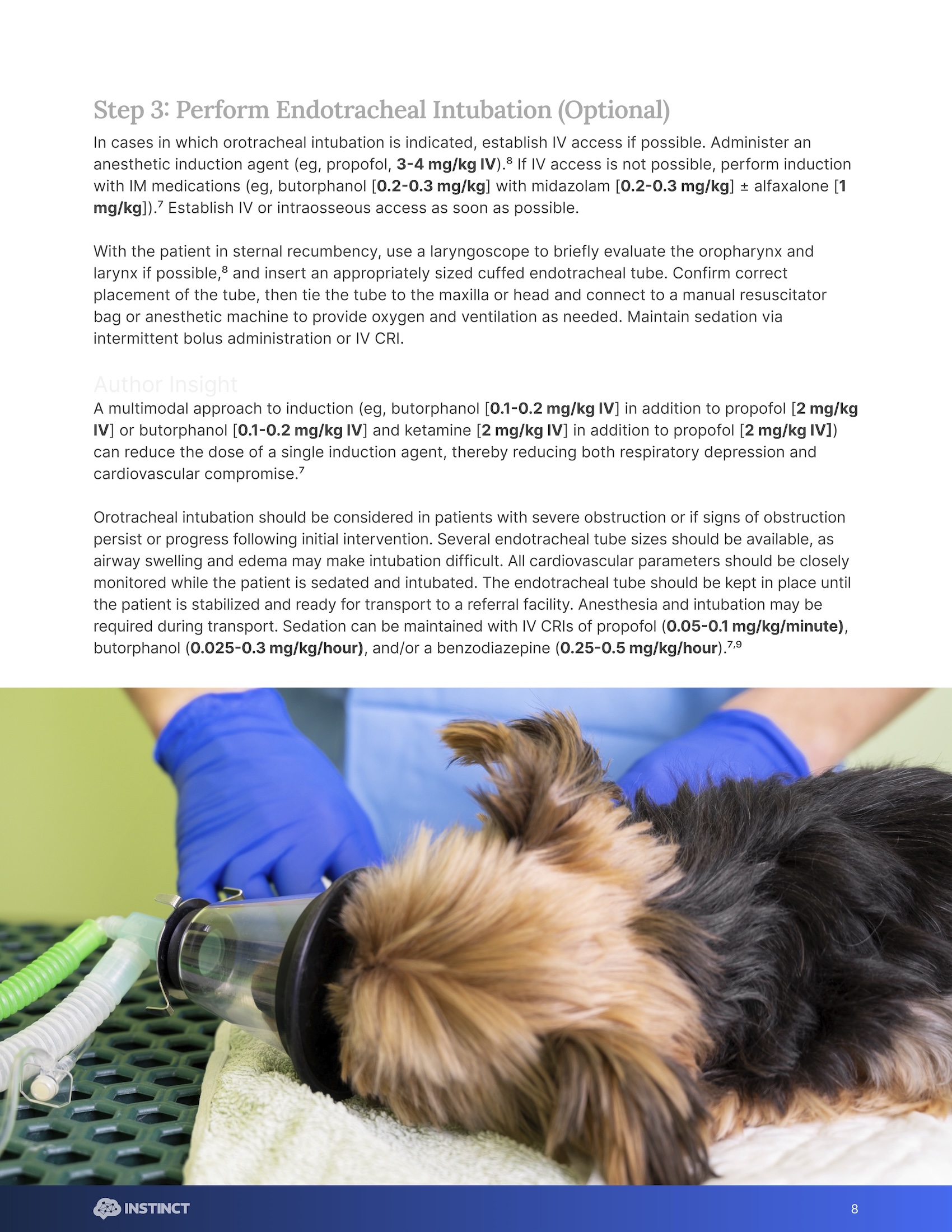
- When to consider intubation and how to support oxygenation and ventilation
- Monitoring temperature and managing concurrent hyperthermia
- Medications that may help reduce airway swelling and aspiration risk during transport
You’ll also see how Standards of Care (formerly Plumb’s Pro) and Plumb’s can support key decisions during stabilization and as you work through your patient’s next steps.
What’s Inside
You’ll find practical guidance on:
- Recognizing respiratory patterns and signs of more severe upper airway obstruction
- Using low-stress handling, oxygen support, and sedation during initial stabilization
- When to consider intubation and how to support oxygenation and ventilation
- Monitoring temperature and managing concurrent hyperthermia
- Medications that may help reduce airway swelling and aspiration risk during transport
You’ll also see how Standards of Care (formerly Plumb’s Pro) and Plumb’s can support key decisions during stabilization and as you work through your patient’s next steps.