


Standards procedure guides offer visual, step-by-step support, whether you’re looking for a quick refresher on a veterinary procedure or walking through it for the first time. To highlight how veterinary professionals are using these resources, we’re counting down the seven most-viewed procedure guides on Standards over the last six months (at the time of publication).
7. Laryngeal Paralysis Diagnosis
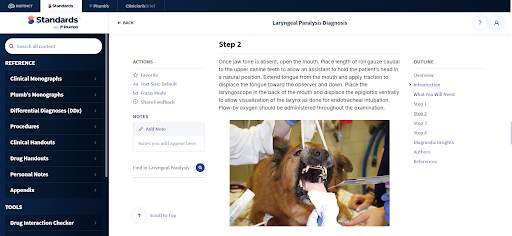
Diagnosing laryngeal paralysis can be tricky, especially when anesthetic depth, respiratory phase, and paradoxical arytenoid motion can all influence the exam. This guide walks through patient positioning, laryngeal visualization, and doxapram use, with practical reminders for assessing laryngeal motion with more confidence.
Want to see how Standards supports your team from procedures to prescribing? Watch a free demo.
6. The Neurological Examination
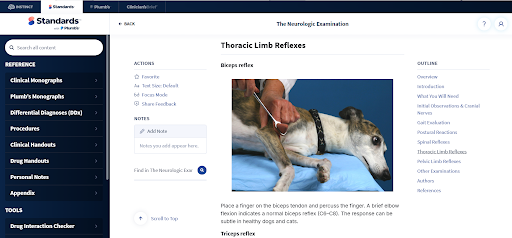
Even when you’ve done plenty of neurologic exams, it helps to have a clear sequence to follow. This guide walks through the exam from first observations and cranial nerves to gait, postural reactions, spinal reflexes, and pain responses, helping you stay organized, localize lesions, and double-check your process.
5. Central Venous Catheter Placement
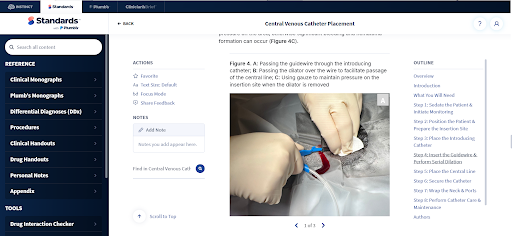
For critically ill patients, reliable venous access is essential. This guide walks through placing a central venous catheter, from catheter selection and measurement to patient positioning, placement using the Seldinger technique, securing the catheter, and ongoing line care.
Want to see how procedure guidance can fit into a real case? Read “From Azotemia to Action With Standards: Veterinary Case Walkthrough”!
4. Cesarean Section in Dogs
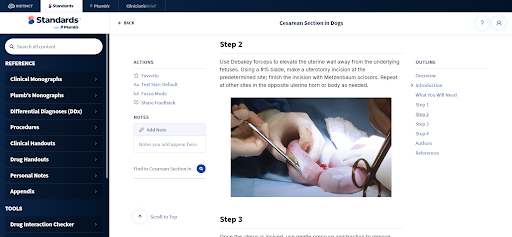
C-sections call for quick decisions, clear roles, and a coordinated team. This guide covers how to recognize when a C-section may be needed, how to prepare the team before induction, and key steps for delivery, uterine closure, neonatal recovery, and postoperative care for the dam and puppies.
3. Cystotomy
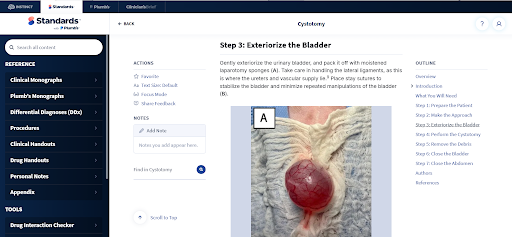
When there’s a cystotomy on the schedule, a clear reference can help you think through the case from pre-op planning to post-op imaging. This guide covers preoperative considerations and approach options, then walks through the key surgical steps, closure, leak checking, and postoperative imaging.
Curious how Standards guidance stacks up against ChatGPT in common clinical scenarios? Read “ChatGPT vs Standards: 4 Ways AI Falls Short in Clinical Decision-Making”!
2. Abdominal Palpation in Dogs & Cats
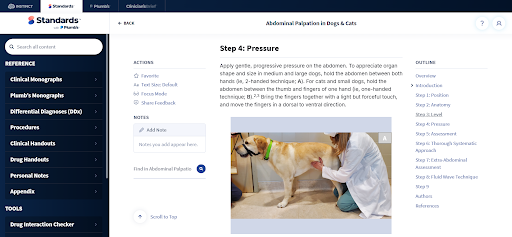
Abdominal palpation can seem straightforward until you’re trying to interpret subtle findings. This guide walks through patient positioning, anatomy, palpation pressure, organ assessment, extra-abdominal assessment, and assessing for abdominal fluid.
1. Nasoesophageal & Nasogastric Feeding Tube Placement
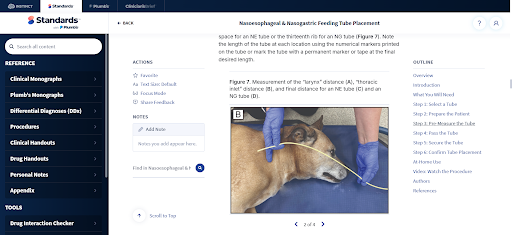
When a patient needs nutritional support but isn’t eating enough on their own, NE and NG tubes can help bridge the gap. This guide walks through tube selection, patient preparation, pre-measurement, tube passage, securement, placement confirmation, and monitoring, with step-by-step visuals and a video demonstration of NG tube placement in a dog.
Clear Guidance for the Moments That Matter
Procedure guides are just one way Standards helps veterinary teams find clear, practical guidance right when they need it. From diagnostic and treatment guidance to algorithms, differential lists, and built-in Plumb’s prescribing support, Standards keeps trusted clinical support within reach.
Watch a free, no-pressure demo to learn how Standards can help your team find clear next steps, from diagnosis to discharge.
See how easy it is to access trusted, evidence-based clinical guidance.
Watch a free demo